Surrealism
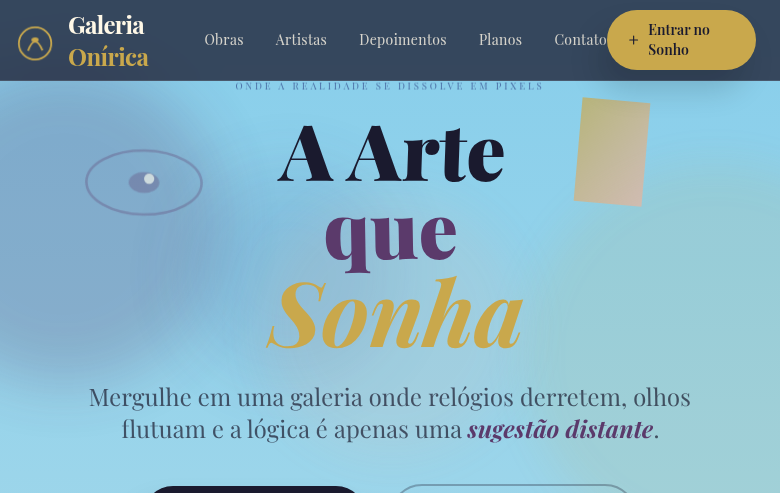
Surrealist landing page that defies logic and reality. Ideal for capas de álbuns, ilustrações editoriais conceituais, digital art, campanhas criativas. AI-ready template.
Use case: Album covers, Conceptual editorial illustrations, Digital art, Creative campaigns
Historical Context
Surrealism didn't emerge from nowhere — it crawled out of Dada's wreckage in 1924 Paris, when André Breton published his manifesto demanding art bypass rational thought entirely. The movement weaponized the unconscious mind. Dalí's melting clocks, Magritte's pipe that isn't a pipe, Remedios Varo's impossible architectures — these weren't random weirdness. They were systematic attacks on logic itself, built on Freudian dream theory and automatic writing techniques. What makes Surrealism endure in visual design is its refusal to respect spatial rules. Objects exist at impossible scales. Gravity is optional. Materials behave wrong — stone floats, water holds shape, flesh becomes landscape. This isn't chaos; it's meticulously rendered impossibility. Dalí painted with photographic precision specifically so the impossible would feel undeniable. The movement's influence on contemporary design is massive and often unacknowledged. Every floating product shot, every dreamscape hero image, every interface that plays with spatial logic owes a debt to Magritte's deadpan presentation of the absurd. Surrealism taught designers that credibility comes from craft, not from depicting reality.
When to Use
Deploy Surrealism when you need to signal that a brand operates outside conventional thinking — but only if you can commit to the craft. Half-hearted surreal elements just look broken. This works for art platforms that need to demonstrate creative ambition, agencies pitching experimental capability, entertainment properties building worlds, and brands whose entire identity rests on defying expectations. Avoid it for anything requiring immediate clarity or trust-building. Surrealism demands the viewer pause and interpret — that's a feature, not a bug, but only when your audience has the patience for it.
Design Principles
- Render the impossible with photographic precision — the more realistic the execution, the more unsettling the impossibility. Dalí understood this. Sloppy surrealism is just clip art.
- Violate exactly one physical law per composition. Multiple impossibilities cancel each other out and read as fantasy rather than surrealism. One broken rule in an otherwise rational scene creates genuine cognitive tension.
- Maintain deadpan presentation. Surrealism loses all power when it winks at the viewer. Magritte's genius was treating absurdity with the same gravity as a passport photo. Your UI chrome, typography, and layout should stay composed while content goes impossible.
- Use scale disruption as your primary spatial weapon. An object rendered at the wrong size relative to its environment is the fastest path to surreal unease — faster than melting, morphing, or any other transformation.
- Preserve material honesty even in impossible contexts. A floating stone should still look heavy. Water defying gravity should still be wet. The tension between correct material rendering and incorrect physics is where surrealism lives.
DESIGN.md
---
version: "alpha"
name: "Surrealism"
description: "Surrealist landing page that defies logic and reality. Ideal for capas de álbuns, ilustrações editoriais conceituais, digital art, campanhas criativas. AI-ready template."
colors:
  primary: "#4A6FA5"
  secondary: "#C9A84C"
  tertiary: "#5B3A6B"
  neutral: "#FFF8E7"
  surface: "#E8B4A0"
  accent: "#87CEEB"
typography:
  h1:
    fontFamily: Playfair Display
    fontSize: 2.25rem
    fontWeight: 700
  body-md:
    fontFamily: Playfair Display
    fontSize: 1rem
    fontWeight: 400
  label-caps:
    fontFamily: Playfair Display
    fontSize: 0.75rem
    fontWeight: 500
spacing:
  sm: 2.0rem
  md: 4.0rem
  lg: 8.0rem
components:
  button-primary:
    backgroundColor: "{colors.primary}"
    textColor: "{colors.neutral}"
    padding: 12px
---

## Overview

Surrealist landing page that defies logic and reality. Ideal for capas de álbuns, ilustrações editoriais conceituais, digital art, campanhas criativas. AI-ready template. Surrealism didn't emerge from nowhere — it crawled out of Dada's wreckage in 1924 Paris, when André Breton published his manifesto demanding art bypass rational thought entirely. The movement weaponized the unconscious mind. Dalí's melting clocks, Magritte's pipe that isn't a pipe, Remedios Varo's impossible architectures — these weren't random weirdness. They were systematic attacks on logic itself, built on Freudian dream theory and automatic writing techniques.

What makes Surrealism endure in visual design is its refusal to respect spatial rules. Objects exist at impossible scales. Gravity is optional. Materials behave wrong — stone floats, water holds shape, flesh becomes landscape. This isn't chaos; it's meticulously rendered impossibility. Dalí painted with photographic precision specifically so the impossible would feel undeniable.

The movement's influence on contemporary design is massive and often unacknowledged. Every floating product shot, every dreamscape hero image, every interface that plays with spatial logic owes a debt to Magritte's deadpan presentation of the absurd. Surrealism taught designers that credibility comes from craft, not from depicting reality.

- Density: 5/10 — Balanced
- Variance: 4/10 — Moderate
- Motion: 6/10 — Expressive

- **Style:** Dreamlike, Logic-Defying, Subconscious, Unexpected
- **Keywords:** Surrealism, dreamlike, logic-defying, subconscious, unexpected juxtaposition, Dali, Magritte, melting, floating, impossible, thought-provoking
- **Era:** 1920s Surrealist Movement
- **Light/Dark:** ✓ Full / ✓ Full

## Colors

- **Dream Blue** (#4A6FA5) — Accent highlight, links and focus states
- **Desert Gold** (#C9A84C) — Premium accent, decorative highlights
- **Twilight Purple** (#5B3A6B) — Accent color, emphasis elements
- **Soft Cream** (#FFF8E7) — Light surface, card backgrounds
- **Flesh Pink** (#E8B4A0) — Primary text color
- **Sky Cyan** (#87CEEB) — Secondary accent
- **Deep Olive** (#4A5A2A) — Extended palette, decorative use
- **Midnight** (#1A1A2E) — Deep contrast surface


## Typography

- **Display / Hero:** Playfair Display — Weight 700, tight tracking, used for headline impact
- **Body:** Playfair Display — Weight 400, 16px/1.6 line-height, max 72ch per line
- **UI Labels / Captions:** Playfair Display — 0.875rem, weight 500, slight letter-spacing
- **Monospace:** JetBrains Mono — Used for code, metadata, and technical values

Scale:
- Hero: clamp(2.5rem, 5vw, 4rem)
- H1: 2.25rem
- H2: 1.5rem
- Body: 1rem / 1.6
- Small: 0.875rem


## Layout

- **Grid:** CSS Grid primary. Max-width containment: 1280px centered with 1.5rem side padding.
- **Spacing rhythm:** Balanced. Base unit: 0.5rem (8px).
- **Section vertical gaps:** clamp(4rem, 8vw, 8rem).
- **Hero layout:** Split-screen (text left, visual right).
- **Feature sections:** Zig-zag alternating text+image rows. No 3-equal-columns.
- **Mobile collapse:** All multi-column layouts collapse below 768px. No horizontal overflow.
- **z-index contract:** base (0) / sticky-nav (100) / overlay (200) / modal (300) / toast (500).


## Elevation & Depth

Unexpected element positioning (absolute/fixed with unusual coordinates), melting/distortion effects via CSS transforms (skew, perspective), floating animation (translateY oscillation), impossible shadow directions, dreamlike blur transitions between sections, surreal scale contrasts (oversized + tiny elements)

- **Physics:** Spring — stiffness 120, damping 20. Confident, weighted transitions.
- **Entry animations:** Fade + translate-Y (16px → 0) over 480ms ease-out. Staggered cascades for lists: 100ms between items.
- **Hover states:** Scale(1.03) + shadow lift over 200ms.
- **Page transitions:** Fade + slide (300ms).
- **Performance:** Only transform and opacity animated. No layout-triggering properties.


## Shapes

Base corner radius: 8px. See rounded tokens in front matter for the full scale.


## Components

- **Primary Button:** Subtly rounded (0.5rem) shape. Accent color fill. Hover: 8% darken + subtle lift shadow. Active: -1px translate tactile press. Font weight 600. No outer glows.
- **Secondary / Ghost Button:** Outline variant. 1.5px border in muted color. Text in primary color. Hover: subtle background fill.
- **Cards:** Subtly rounded (0.5rem) corners. Surface background. Subtle shadow (0 2px 12px rgba(0,0,0,0.06)). 1px border stroke.
- **Inputs:** Label above input. 1px border stroke. Focus ring: 2px accent color offset 2px. Error text below in semantic red. No floating labels.
- **Navigation:** Primary surface background. Active item: accent color indicator. Font weight 500 when active.
- **Skeletons:** Shimmer animation matching component dimensions. No circular spinners.
- **Empty States:** Icon-based composition with descriptive text and action button.


## Do's and Don'ts

- No emojis in UI — use icon system only (Lucide, Heroicons)
- No pure black (#000000) — use off-black or charcoal variants
- No oversaturated accent colors (saturation cap: 80%)
- No 3-column equal-width feature layouts — use zig-zag or asymmetric grid
- No `h-screen` — use `min-h-[100dvh]`
- No AI copywriting clichés: "Elevate", "Seamless", "Unleash", "Next-Gen"
- No broken external image links — use picsum.photos or inline SVG
- No generic lorem ipsum in demos

- Do Unexpected element positioning
- Do Melting/distortion CSS effects
- Do Floating animations
- Do Impossible shadow directions
- Do Dreamlike blur transitions
- Do Surreal scale contrasts
- Do Logic-defying layout
- Do Thought-provoking atmosphere
- Do Responsive with maintained surrealism


## Use Case

Album covers, Conceptual editorial illustrations, Digital art, Creative campaigns
Technical Specs
CSS
font-family: 'Playfair Display', serif, background: linear-gradient(to bottom, #87CEEB, #FFF8E7, #5B3A6B), color: #1A1A2E, transform: skew(-2deg) perspective(800px), animation: float 4s ease-in-out infinite, box-shadow: -10px 20px 30px rgba(0,0,0,0.15) for impossible shadows, position: absolute with unusual offsets
Variables
--color-blue: #4A6FA5, --color-gold: #C9A84C, --color-purple: #5B3A6B, --color-cream: #FFF8E7, --font-primary: 'Playfair Display', --float-animation: translateY(-10px) to translateY(10px), --skew: -2deg, --perspective: 800px, --spacing: 2rem
Checklist
☐ Unexpected element positioning, ☐ Melting/distortion CSS effects, ☐ Floating animations, ☐ Impossible shadow directions, ☐ Dreamlike blur transitions, ☐ Surreal scale contrasts, ☐ Logic-defying layout, ☐ Thought-provoking atmosphere, ☐ Responsive with maintained surrealism
Colors
Primary
Secondary
Effects
Unexpected element positioning (absolute/fixed with unusual coordinates), melting/distortion effects via CSS transforms (skew, perspective), floating animation (translateY oscillation), impossible shadow directions, dreamlike blur transitions between sections, surreal scale contrasts (oversized + tiny elements)
Light/Dark
✓ Full / ✓ Full
AI Prompt
Act as a Senior Frontend Engineer and Expert UI Designer.
Your task is to code a complete Landing Page on the first attempt.
- Landing Page Theme: <INSERT THEME>
- Sections to add: <INSERT SECTIONS>

Generate the final code immediately following these definitions:

## Style

- **Name:** Surrealism
- **Type:** Dreamlike, Logic-Defying, Subconscious, Unexpected
- **Keywords:** Surrealism, dreamlike, logic-defying, subconscious, unexpected juxtaposition, Dali, Magritte, melting, floating, impossible, thought-provoking
- **Era:** 1920s Surrealist Movement
- **Light/Dark:** ✓ Full / ✓ Full

## Color Palette

- **Primary:** Dream Blue #4A6FA5, Desert Gold #C9A84C, Twilight Purple #5B3A6B, Soft Cream #FFF8E7
- **Secondary:** Flesh Pink #E8B4A0, Sky Cyan #87CEEB, Deep Olive #4A5A2A, Midnight #1A1A2E

## Visual Effects

Unexpected element positioning (absolute/fixed with unusual coordinates), melting/distortion effects via CSS transforms (skew, perspective), floating animation (translateY oscillation), impossible shadow directions, dreamlike blur transitions between sections, surreal scale contrasts (oversized + tiny elements)

## AI Visual Direction

Design a surrealist landing page that defies logic and reality. Use dream blue, desert gold, twilight purple, soft cream. Apply unexpected element positioning, melting/distortion CSS transforms, floating animations, impossible shadow directions, dreamlike blur transitions, surreal scale contrasts. Typography should mix sizes dramatically. Dali/Magritte-inspired atmosphere where everyday objects appear in dreamlike impossible contexts.

## CSS Technical

```css
font-family: 'Playfair Display', serif, background: linear-gradient(to bottom, #87CEEB, #FFF8E7, #5B3A6B), color: #1A1A2E, transform: skew(-2deg) perspective(800px), animation: float 4s ease-in-out infinite, box-shadow: -10px 20px 30px rgba(0,0,0,0.15) for impossible shadows, position: absolute with unusual offsets
```

## Design System Variables

```css
--color-blue: #4A6FA5, --color-gold: #C9A84C, --color-purple: #5B3A6B, --color-cream: #FFF8E7, --font-primary: 'Playfair Display', --float-animation: translateY(-10px) to translateY(10px), --skew: -2deg, --perspective: 800px, --spacing: 2rem
```

## Implementation Checklist

- ☐ Unexpected element positioning
- ☐ Melting/distortion CSS effects
- ☐ Floating animations
- ☐ Impossible shadow directions
- ☐ Dreamlike blur transitions
- ☐ Surreal scale contrasts
- ☐ Logic-defying layout
- ☐ Thought-provoking atmosphere
- ☐ Responsive with maintained surrealism

## Execution Rules

1. Strictly follow the defined visual style.
2. Use high-quality inline SVG icons (Heroicons or Lucide style) — NEVER use emojis as icons.
3. Add `cursor-pointer` and smooth `hover` states (transition-all) on all interactive elements.
4. Required Page Structure:
   - Navbar (Logo + Links + CTA)
   - Hero Section (Impactful Headline + Subtitle + 2 buttons + 3D/Abstract visual element via CSS)
   - Features (3 cards with icons)
   - Testimonials (3 cards)
   - Pricing (3 tiers, highlight the middle one)
   - Final CTA
   - Full Footer with social links, privacy policy, terms of use, contact and SEO links.
5. All text content must be in English.
6. The visual must be CLEARLY distinct — do not create a "default Bootstrap" design. Force the use of the provided design system variables.
7. Use `<style>` tags in the head for custom classes (especially for complex backdrop-filter effects and animations) that Tailwind CDN doesn't cover.
8. Full Responsiveness: Layout must adapt perfectly to Mobile, Tablet and Desktop (vertical stack on mobile).
9. Include basic SEO, Viewport and Open Graph meta tags in `<head>`.
10. Footer must contain: Copyright 2026, Secondary navigation links and Social media icons.
11. Make the creative decisions needed to deliver the complete, functional result now.
Related
Last synced: 4/1/2026