Denim and Industrial Craft
Denim style landing, jeans texture background, gold stitching, industrial craft, textile aesthetic, rugged design. Ideal for landing pages, modern websites. AI-ready template.
Use case: Landing pages, Modern websites
Historical Context
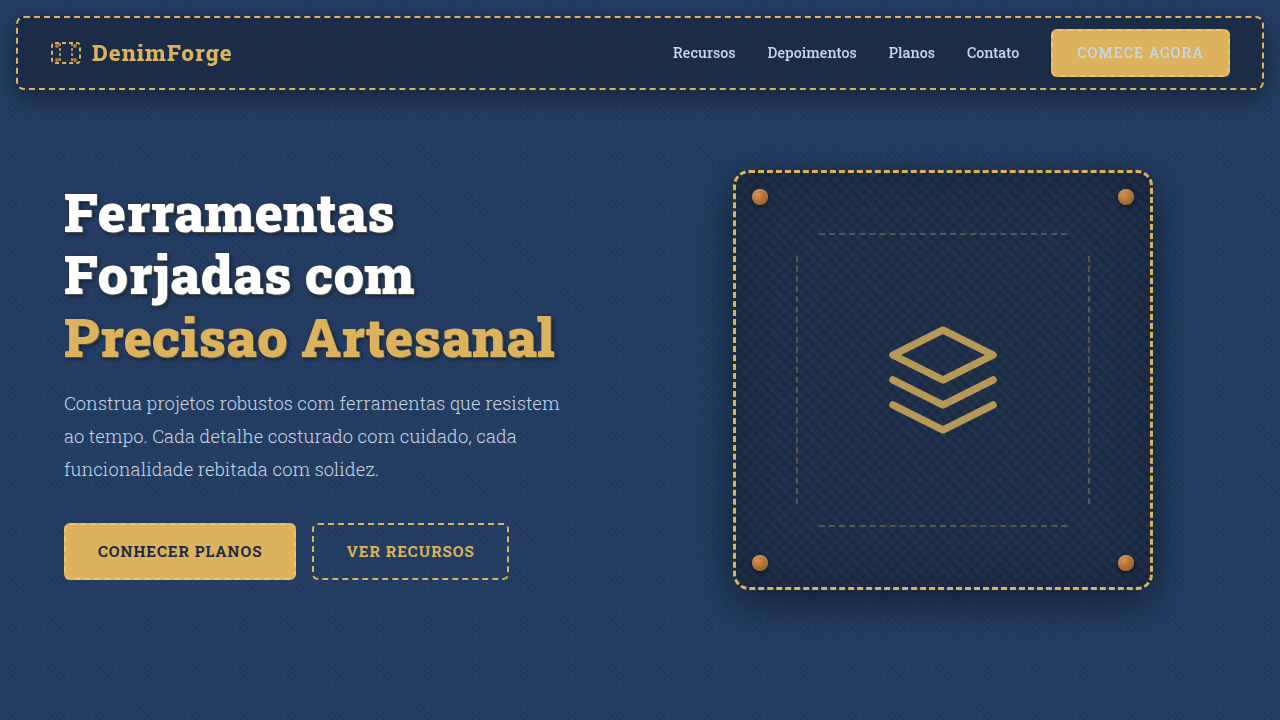
Denim entered digital design the same way it entered culture — through labor. The indigo wash, the visible selvedge, the copper rivet detail. These weren't decorative choices. They were functional signals lifted from a century of workwear heritage. Levi's understood this early: their digital presence leans on raw texture photography, tight crops on warp and weft, type that feels stamped rather than set. Carhartt WIP took it further — bridging the gap between factory floor and streetwear with interfaces that feel worn-in, not polished. What makes denim textures work on screen is their inherent honesty. A twill weave pattern communicates something no gradient ever could: that this thing was built to last. The industrial craft aesthetic — exposed stitching, canvas overlays, aged metal hardware — translates into UI elements that reject slickness in favor of substance. It's anti-corporate by nature. The tension is what makes it interesting. Pairing raw textile imagery with futuristic typography or tech-forward layouts creates a friction that feels contemporary. Heritage meeting innovation. The hand-touched meeting the machine-precise. That's where the energy lives.
When to Use
Reach for this when the brand story involves making things — physically, deliberately, with hands and machines. Denim companies, obviously. But also craft breweries, tool makers, artisan studios, any workwear label that needs digital presence without losing its grit. Works beautifully when you need to communicate longevity and authenticity without resorting to nostalgic clichés. Avoid if the product is ephemeral or disposable — denim aesthetics promise permanence.
Design Principles
- Texture over flatness — let the weave, the grain, the imperfection carry visual weight instead of relying on solid color fills
- Functional ornamentation — every stitch line, rivet, and hardware detail should reference actual construction, never purely decorative
- Contrast through material — pair raw, tactile surfaces against clean typographic systems to create productive tension
- Wear as patina — embrace aged, faded, and distressed elements as signs of quality rather than degradation
- Industrial restraint — keep the palette tight (indigo, raw canvas, oxidized metal) and let material honesty do the talking
DESIGN.md
---
version: "alpha"
name: "Denim and Industrial Craft"
description: "Denim style landing, jeans texture background, gold stitching, industrial craft, textile aesthetic, rugged design. Ideal for landing pages, modern websites. AI-ready template."
colors:
  primary: "#223C63"
  secondary: "#FFFFFF"
  tertiary: "#DCB35C"
  neutral: "#1A2B45"
  surface: "#f0c36d"
  accent: "#8B4513"
typography:
  h1:
    fontFamily: Roboto Slab
    fontSize: 2.5rem
    fontWeight: 700
  body-md:
    fontFamily: Roboto Slab
    fontSize: 1rem
    fontWeight: 400
components:
  button-primary:
    backgroundColor: "{colors.primary}"
    textColor: "{colors.neutral}"
    padding: 12px
---

## Overview

Denim style landing, jeans texture background, gold stitching, industrial craft, textile aesthetic, rugged design. Ideal for landing pages, modern websites. AI-ready template. Denim entered digital design the same way it entered culture — through labor. The indigo wash, the visible selvedge, the copper rivet detail. These weren't decorative choices. They were functional signals lifted from a century of workwear heritage. Levi's understood this early: their digital presence leans on raw texture photography, tight crops on warp and weft, type that feels stamped rather than set. Carhartt WIP took it further — bridging the gap between factory floor and streetwear with interfaces that feel worn-in, not polished.

What makes denim textures work on screen is their inherent honesty. A twill weave pattern communicates something no gradient ever could: that this thing was built to last. The industrial craft aesthetic — exposed stitching, canvas overlays, aged metal hardware — translates into UI elements that reject slickness in favor of substance. It's anti-corporate by nature.

The tension is what makes it interesting. Pairing raw textile imagery with futuristic typography or tech-forward layouts creates a friction that feels contemporary. Heritage meeting innovation. The hand-touched meeting the machine-precise. That's where the energy lives.

- Density: 5/10 — Balanced
- Variance: 4/10 — Moderate
- Motion: 4/10 — Subtle

- **Style:** Tactile, Durable, Textured
- **Keywords:** denim, fabric, jeans, texture, stitch, craft, industrial, copper, rugged
- **Era:** Heritage Craft
- **Light/Dark:** ✗ No / ✓ Full

## Colors

- **Background** (#223C63) — Primary background surface
- **Text** (#FFFFFF) — Primary text color
- **Accent** (#DCB35C) — Primary accent, CTAs and interactive elements
- **Dark Wash** (#1A2B45) — Deep contrast surface
- **Thread Gold** (#f0c36d) — Premium accent, decorative highlights
- **Leather Brown** (#8B4513) — Extended palette, decorative use
- **Rivet Copper** (#B87333) — Metallic accent, decorative detail


## Typography

- **Display / Hero:** Roboto Slab — Weight 700, tight tracking, used for headline impact
- **Body:** Roboto Slab — Weight 400, 16px/1.6 line-height, max 72ch per line
- **UI Labels / Captions:** Roboto Slab — 0.875rem, weight 500, slight letter-spacing
- **Monospace:** JetBrains Mono — Used for code, metadata, and technical values

Scale:
- Hero: clamp(2.5rem, 5vw, 4rem)
- H1: 2.25rem
- H2: 1.5rem
- Body: 1rem / 1.6
- Small: 0.875rem


## Layout

- **Grid:** CSS Grid primary. Max-width containment: 1280px centered with 1.5rem side padding.
- **Spacing rhythm:** Balanced. Base unit: 0.5rem (8px).
- **Section vertical gaps:** clamp(4rem, 8vw, 8rem).
- **Hero layout:** Split-screen (text left, visual right).
- **Feature sections:** Zig-zag alternating text+image rows. No 3-equal-columns.
- **Mobile collapse:** All multi-column layouts collapse below 768px. No horizontal overflow.
- **z-index contract:** base (0) / sticky-nav (100) / overlay (200) / modal (300) / toast (500).


## Elevation & Depth

Realistic denim fabric background, embroidered text, patch-style diagrams, copper rivets, heavy cotton canvas weave.

- **Physics:** Ease-out curves, 200-300ms duration. Smooth and predictable.
- **Entry animations:** Fade + translate-Y (16px → 0) over 420ms ease-out. Staggered cascades for lists: 80ms between items.
- **Hover states:** Subtle color shift + shadow adjustment over 200ms.
- **Page transitions:** Fade only (200ms).
- **Performance:** Only transform and opacity animated. No layout-triggering properties.


## Shapes

Base corner radius: 8px. See rounded tokens in front matter for the full scale.


## Components

- **Primary Button:** Subtly rounded (0.5rem) shape. Accent color fill. Hover: 8% darken + subtle lift shadow. Active: -1px translate tactile press. Font weight 600. No outer glows.
- **Secondary / Ghost Button:** Outline variant. 1.5px border in muted color. Text in primary color. Hover: subtle background fill.
- **Cards:** Subtly rounded (0.5rem) corners. Surface background. Subtle shadow (0 2px 12px rgba(0,0,0,0.06)). 1px border stroke.
- **Inputs:** Label above input. 1px border stroke. Focus ring: 2px accent color offset 2px. Error text below in semantic red. No floating labels.
- **Navigation:** Primary surface background. Active item: accent color indicator. Font weight 500 when active.
- **Skeletons:** Shimmer animation matching component dimensions. No circular spinners.
- **Empty States:** Icon-based composition with descriptive text and action button.


## Do's and Don'ts

- No emojis in UI — use icon system only (Lucide, Heroicons)
- No pure black (#000000) — use off-black or charcoal variants
- No oversaturated accent colors (saturation cap: 80%)
- No 3-column equal-width feature layouts — use zig-zag or asymmetric grid
- No `h-screen` — use `min-h-[100dvh]`
- No AI copywriting clichés: "Elevate", "Seamless", "Unleash", "Next-Gen"
- No broken external image links — use picsum.photos or inline SVG
- No generic lorem ipsum in demos

- Do Denim texture background
- Do Dashed borders (stitching)
- Do Gold/Yellow accent colors (thread)
- Do Slab serif typography
- Do Patch-like container elements


## Use Case

Landing pages, Modern websites
Technical Specs
CSS
background-color: #223C63; color: #FFFFFF; font-family: 'Roboto Slab', serif; border: 2px dashed #DCB35C; box-shadow: 0 4px 6px rgba(0,0,0,0.3);
Variables
--denim-blue: #223C63, --thread-gold: #DCB35C, --leather: #8B4513, --font-slab: 'Roboto Slab', serif, --stitch-style: dashed 2px
Checklist
☐ Denim texture background, ☐ Dashed borders (stitching), ☐ Gold/Yellow accent colors (thread), ☐ Slab serif typography, ☐ Patch-like container elements
Colors
Primary
Secondary
Effects
Realistic denim fabric background, embroidered text, patch-style diagrams, copper rivets, heavy cotton canvas weave.
Light/Dark
✗ No / ✓ Full
AI Prompt
Act as a Senior Frontend Engineer and Expert UI Designer.
Your task is to code a complete Landing Page on the first attempt.
- Landing Page Theme: <INSERT THEME>
- Sections to add: <INSERT SECTIONS>

Generate the final code immediately following these definitions:

## Style

- **Name:** Denim and Industrial Craft
- **Type:** Tactile, Durable, Textured
- **Keywords:** denim, fabric, jeans, texture, stitch, craft, industrial, copper, rugged
- **Era:** Heritage Craft
- **Light/Dark:** ✗ No / ✓ Full

## Color Palette

- **Primary:** Background #223C63, Text #FFFFFF, Accent #DCB35C
- **Secondary:** Dark Wash #1A2B45, Thread Gold #f0c36d, Leather Brown #8B4513, Rivet Copper #B87333

## Visual Effects

Realistic denim fabric background, embroidered text, patch-style diagrams, copper rivets, heavy cotton canvas weave.

## AI Visual Direction

denim style landing, jeans texture background, gold stitching, industrial craft, textile aesthetic, rugged design.

## CSS Technical

```css
background-color: #223C63; color: #FFFFFF; font-family: 'Roboto Slab', serif; border: 2px dashed #DCB35C; box-shadow: 0 4px 6px rgba(0,0,0,0.3);
```

## Design System Variables

```css
--denim-blue: #223C63, --thread-gold: #DCB35C, --leather: #8B4513, --font-slab: 'Roboto Slab', serif, --stitch-style: dashed 2px
```

## Implementation Checklist

- ☐ Denim texture background
- ☐ Dashed borders (stitching)
- ☐ Gold/Yellow accent colors (thread)
- ☐ Slab serif typography
- ☐ Patch-like container elements

## Execution Rules

1. Strictly follow the defined visual style.
2. Use high-quality inline SVG icons (Heroicons or Lucide style) — NEVER use emojis as icons.
3. Add `cursor-pointer` and smooth `hover` states (transition-all) on all interactive elements.
4. Required Page Structure:
   - Navbar (Logo + Links + CTA)
   - Hero Section (Impactful Headline + Subtitle + 2 buttons + 3D/Abstract visual element via CSS)
   - Features (3 cards with icons)
   - Testimonials (3 cards)
   - Pricing (3 tiers, highlight the middle one)
   - Final CTA
   - Full Footer with social links, privacy policy, terms of use, contact and SEO links.
5. All text content must be in English.
6. The visual must be CLEARLY distinct — do not create a "default Bootstrap" design. Force the use of the provided design system variables.
7. Use `<style>` tags in the head for custom classes (especially for complex backdrop-filter effects and animations) that Tailwind CDN doesn't cover.
8. Full Responsiveness: Layout must adapt perfectly to Mobile, Tablet and Desktop (vertical stack on mobile).
9. Include basic SEO, Viewport and Open Graph meta tags in `<head>`.
10. Footer must contain: Copyright 2026, Secondary navigation links and Social media icons.
11. Make the creative decisions needed to deliver the complete, functional result now.
Related
Last synced: 4/1/2026